
Beep beep - it’s that time of year again! Whether you drive one kiddo to school on your way to the office or carpool the entire neighborhood, Car Line Season (also known as “Hurry-Up-and-Wait Season”) waits for no one.
Here's the thing about car seat safety: there's rarely just one "right" answer. There's Safe (the minimum you need to protect your kiddo), Safer (a step up that most safety-minded parents aim for), and Safest (the gold standard, if you want to go all in). Use this framework to figure out where you and your family land on each of these car line tips this school year.
Here are some tips to ensure your elementary kiddos are riding through car lines safely and securely this school year.
Car Seat Safety: Where Do We Draw the (Car) Lines?
1. Five-point harnesses: how long is long enough?
- Safe: Keep your child in a five-point harness until at least age 5.
- Safer: Keep them harnessed until they're closer to age 6-7, using good judgment about maturity and impulse control in the car.
- Safest: Keep that harness on until your child hits the maximum height or weight limit of the seat. A harness keeps wiggly kids in a safe position for the entire ride, and I don't know many young kids who can be trusted to sit properly without one. Check your manual for graduation guidelines specific to your seat, and don't let carpool-line speed talk you into an early goodbye.
Quickness in the carpool line is not a reason to prematurely move your elementary schooler out of the harnessed stage. If your kiddo needs help unbuckling, check out the UnbuckleMe car seat buckle release tool. It’s a great tool for those kiddos that aren’t quite ready for booster responsibility but can handle the responsibility of getting themselves in and out. Practice using it in low-pressure situations before that first day of school!
2. High-back boosters: it's all about the fit.
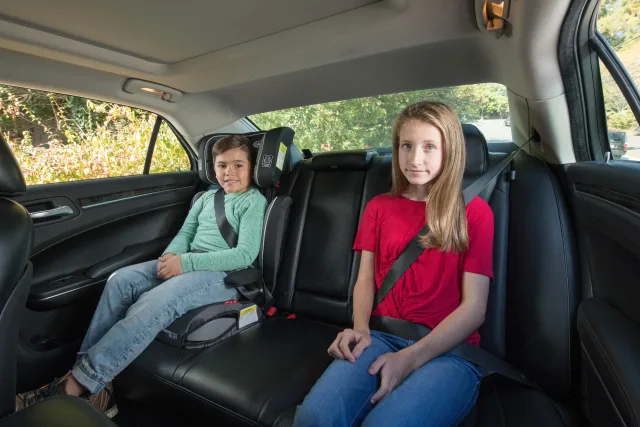
High-back boosters are the first step in teaching kids how to use an adult seat belt (teaching being the key word). Parents often breathe a sigh of relief at this stage...but proceed with caution! Moving from a harness to a seat belt is a major adjustment. Harnesses restrain movement and keep kids positioned; seat belts allow a lot more freedom, and with that freedom comes responsibility.
- Safe: Make sure the booster is boosting your child up enough that the adult seat belt can do its job across their body, not their neck or belly.
- Safer: Double check the shoulder belt guide sits just above your child's shoulder, so the belt lands centered on the collarbone before crossing the chest and that the lap belt sits low across the hips, touching the upper thighs, not the belly.
- Safest: Nail the fit and train the habit. Once the fit is dialed in, teach your child to sit upright and wiggle-free for the whole ride. Start with short trips or frequent reminders, and route both the shoulder and lap belt under the booster's armrests (there are a couple of exceptions, so check your manual). Give your child practice time buckling independently before they're in the middle of a fast-moving pickup line.
3. High-back to no-back: slow down on that transition.
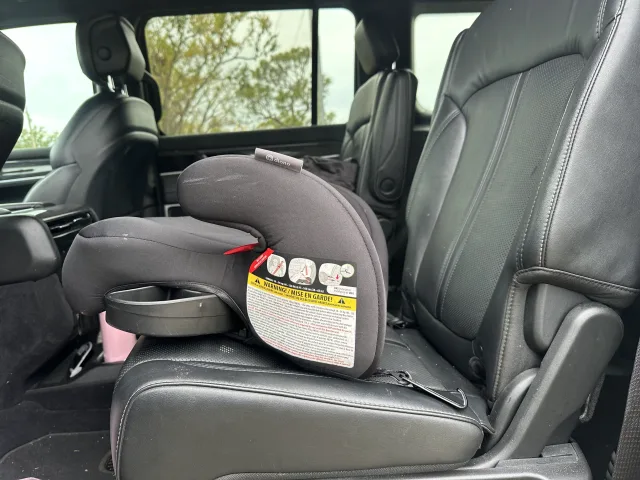
- Safe: Move to a no-back booster once your child physically outgrows their high-back.
- Safer: Hold off until they're solidly outgrowing the high-back, not just approaching the upper end of the range.
- Safest: Let them ride out the high-back completely. With a structured shoulder belt guide, better postural support, and a comfy headrest, high-backs help younger or smaller booster riders stay properly positioned for the whole ride. Save the no-back booster for the very final stretch, typically age eight and beyond.
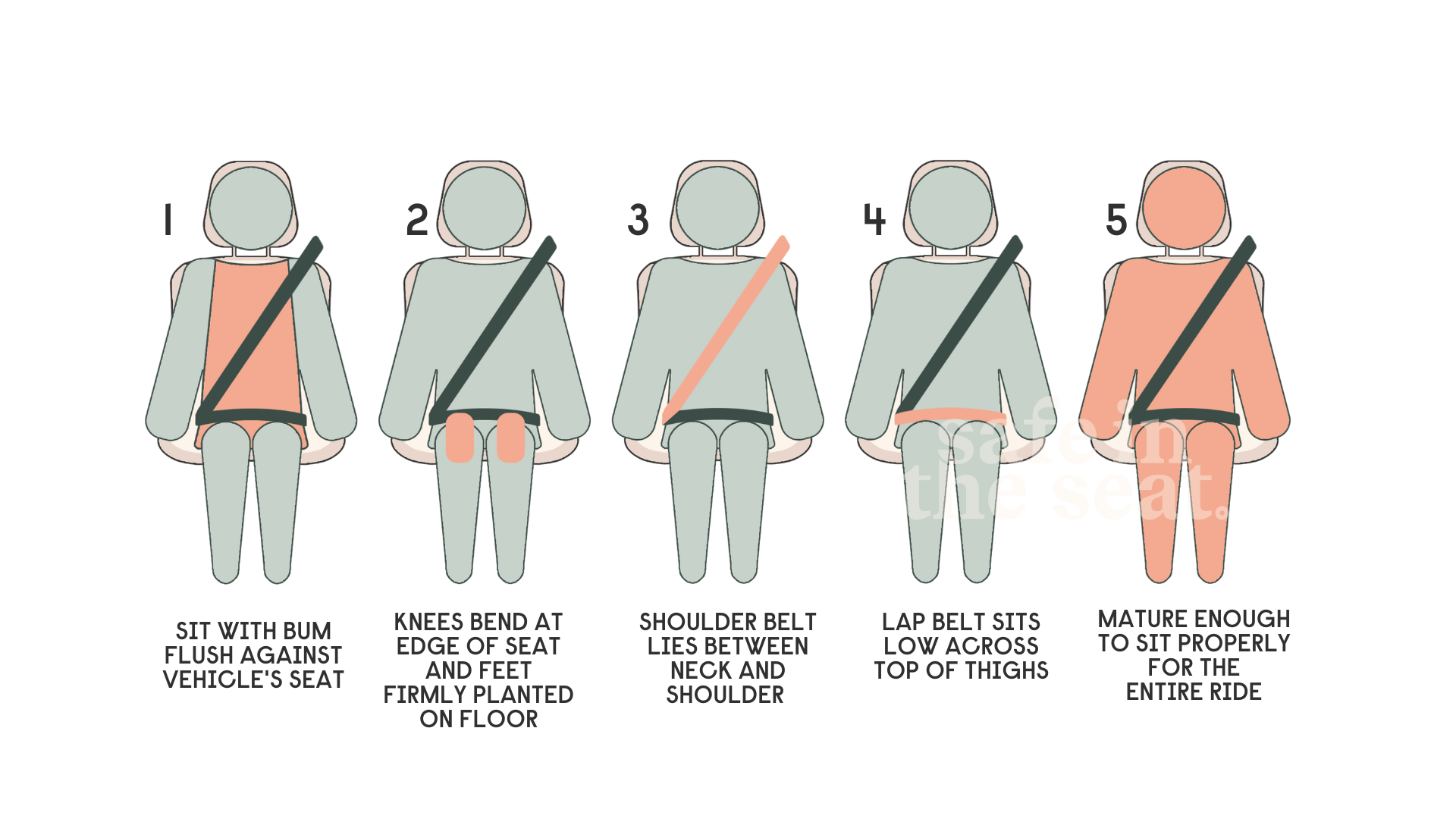
4. Riding without a booster: the 5-step test is non-negotiable.
- Safe: Don't let your child ride booster-free until they're at least 4'9″ (typically ages 10-12).
- Safer: Use height and age as a starting point, but actually check belt fit on your specific vehicle before making the call.
- Safest: Kids should pass the 5-step test before riding without a booster, every time, in every car they ride in. Adult seat belts are for adults. Kids who leave boosters behind before they fit safely are at real risk for serious injury. To counteract their newfound "uncool," ultra-safe vibe, buy them those popular new sneakers, but keep that booster until they pass the test. It'll be here before you know it (and soon after, they'll be the ones driving).
5. Front seat riding: age is only half the equation.
- Safe: Follow your state's minimum age law for front-seat riding.
- Safer: Wait until your child is a teenager before considering the front seat, regardless of state minimums.
- Safest: Wait until your child both passes the 5-step test and meets the age requirement. Undeveloped bones and muscles aren't ready for the impact of a 200-mph airbag. Airbags are built to protect adult bodies, and they can seriously injure or kill a child. So: goodbye 12, hello 13-year-old's birthday present! Welcome to the teenage years.
6. If the car is moving, your child should not be.
There's no tiered version of this one. It's just safe. Period. I know it's tempting to get a head start; we're all in a hurry, and we're practically halfway into the house by the time the car's in park. But kids stay buckled until it's their turn to hop out. Car moving? Passengers buckled.
7. Pickup line: don't drive until everyone's seated and buckled.
- Safe: Confirm every child is buckled before you pull away from the curb.
- Safer: Practice fast, safe buckling before school starts, so kids aren't fumbling under pickup-line pressure. Older harnessed kids can usually squeeze their arms into an already-tight harness, skipping the hardest step. Booster riders should practice finding the buckle quickly. It's tougher than it sounds when their booster's wedged next to a sibling's seat.
- Safest: Build in a backup plan. If school staff insists on keeping the line moving and there's no time to get everyone settled, pull into the closest parking spot and finish buckling there. Crashes can happen anytime, anywhere, even turning out of the school lot. It's not worth the risk.
8. Carpooling? Every kid in your car is your responsibility.
- Safe: Make sure every child has an appropriate restraint for their stage before they get in your car.
- Safer: Know each child's stage ahead of time and have the right car seat or booster ready and correctly installed, not scrambling last minute.
- Safest: Treat every kid in your car exactly like your own. Determine safe seating positions in advance, and either provide the stage-appropriate device yourself or ask the other parents to supply it before agreeing to drive. Think about how you'd want someone else to transport your child, and do exactly that. Plus a little extra, just in case. (Currently sending your neighborhood-carpool-hero award to be engraved.)
Whew! Feel like a pro yet?
With a million ever-changing car seat safety rules, it’s impossible to know it all, all the time. The good news: wherever you land on the Safe–Safer–Safest scale for each of these, you're already doing right by your kiddo just by asking the question.
The reality is your child will need some sort of safety device until they are 10-12 years old, maybe longer. Take the guesswork out of graduating from one seat to the next with our Car Seat Progression eBook. From baby to big kid, feel confident and safe at every stage.
If you’re looking for a new seat, head over to our Car Seat Buying Kits for more info on selecting the right seat for your kiddo. And make sure you are following along on Instagram for fun, free content too!
Happy school days, mamas!
Affiliate links are included above. Safe in the Seat earns a small commission when you purchase through these links with no cost to you. We so appreciate your support.